Interactive programming at MIT
Cultures of Programming — Part 6
Tomas Petricek, Charles University, Prague

Spacewar!
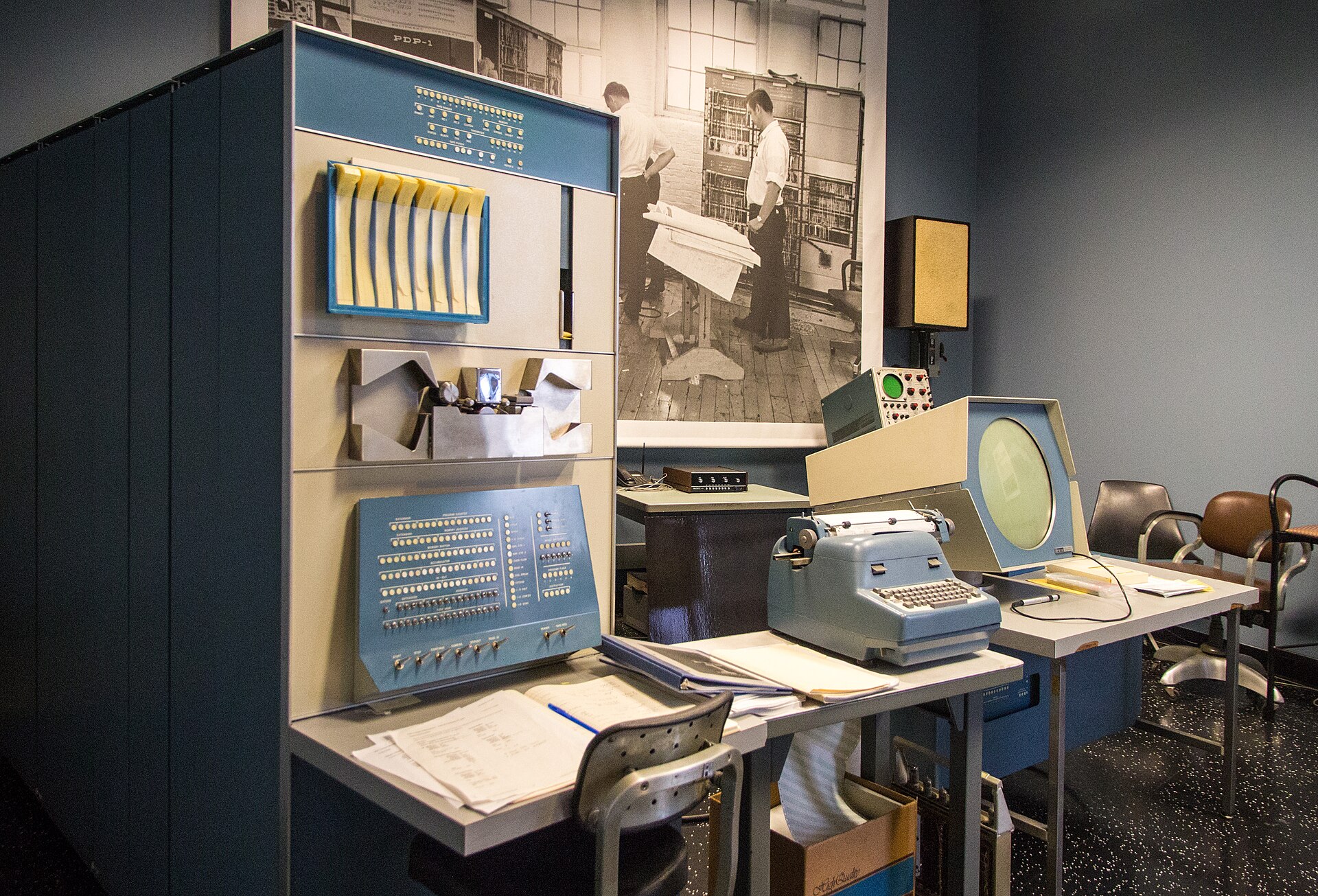
TX-0 and PDP-1 computers
Computing in the late 1950s
Batch processing
- Hand punched cards to operator
- Get "Expects a comma. Abort"
TX-0 (1956) and TX-2 (1958)
- Test transistor technology
- Donated to MIT RLE, available for interactive use
DEC PDP-1 (1959)
- More powerful TX-inspired commercial computer
- Available at BBN and donated to MIT
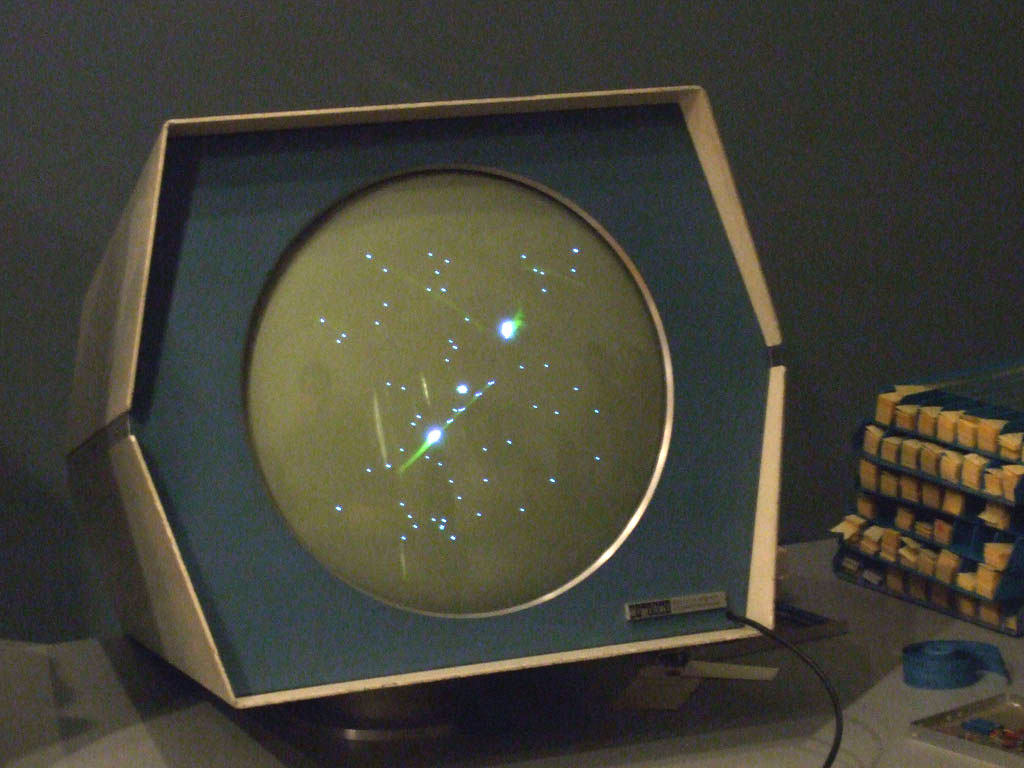
Spacewar!
Steve "Slug" Russell & Tech Model Railroad Club (TMRC) members
Sine and cosine story...
"What's your excuse?"
Demo showcasing PDP-1 capabilities
Spacewar! and hacker culture
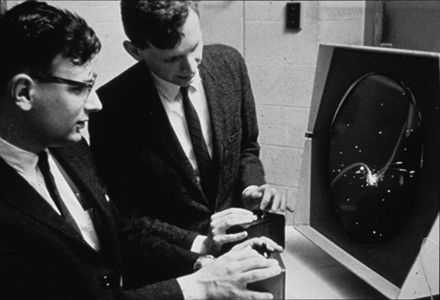
Fun and late-night hacking
- Lowest priority thing to do!
- Less demand during the nights
Technical challenges
- Starmap with 1000 real stars
- Generating instructions to draw rotated spaceship
Information sharing culture
- Improvements to code encouraged!
- Practical hands-on knowledge
Interactive computers
-
Whirlwind computer for SAGE (1951)
Cathode-ray-tube (CRT) screen and light pen input -
Transistorized experimental computer (TX-0)
Interactive use, toggle switch storage, core memory -
Transistorized experimental computer (TX-2)
64k of 36bit word memory, graphics and light pen -
LINC "personal computer" (1962)
Real-time processing, medical applications
Interactive programming
TX-0 and PDP-1 computers
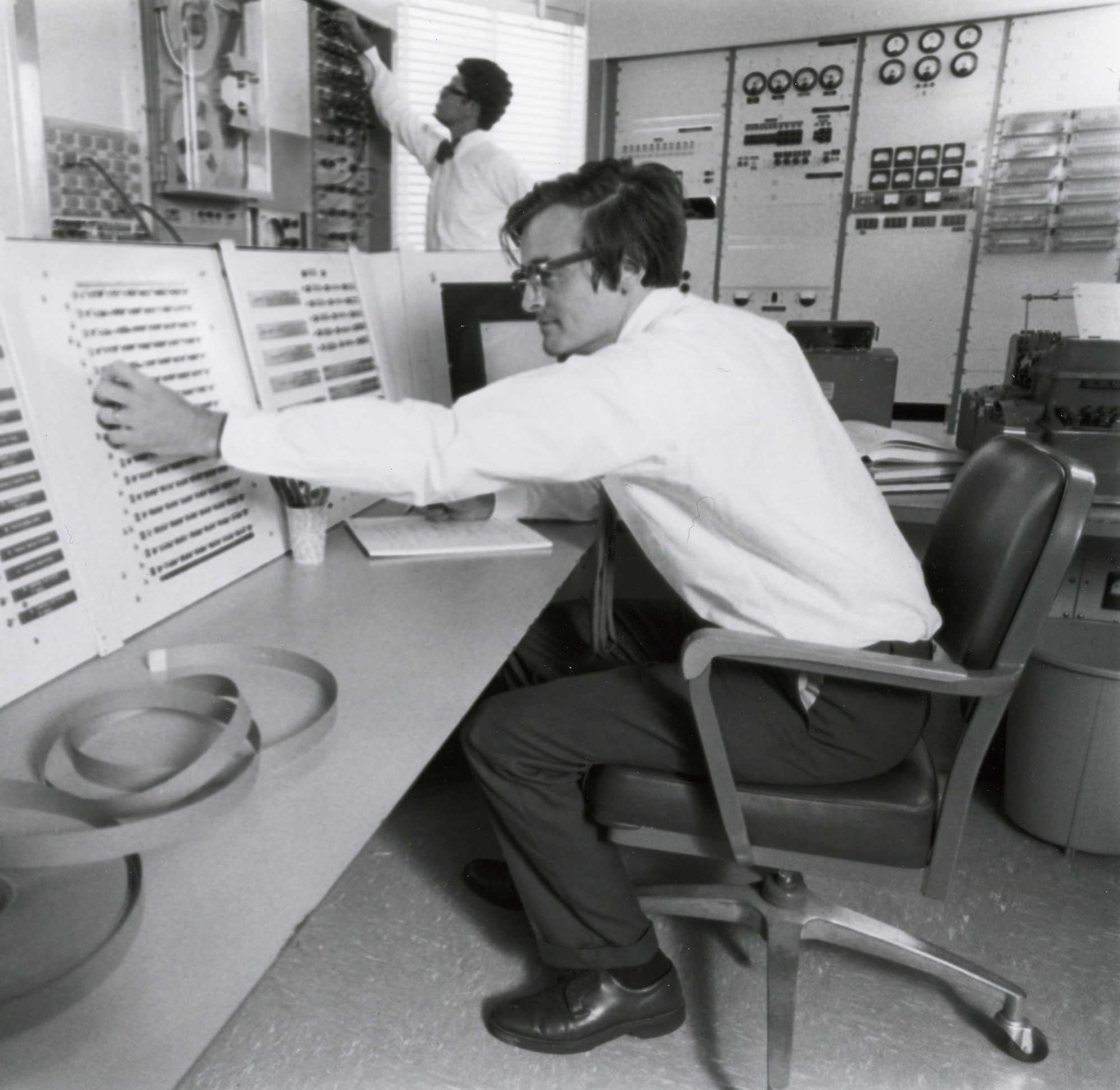
On-line debugging
"For the past few years it has been regarded as a great professional sin, but like most sins, it still exists, is rarely talked about, and hardly ever admitted."
Technical innovations
- Toggle switch storage
- Flexowriter terminal
- CRT screen
TX-0 Direct Input
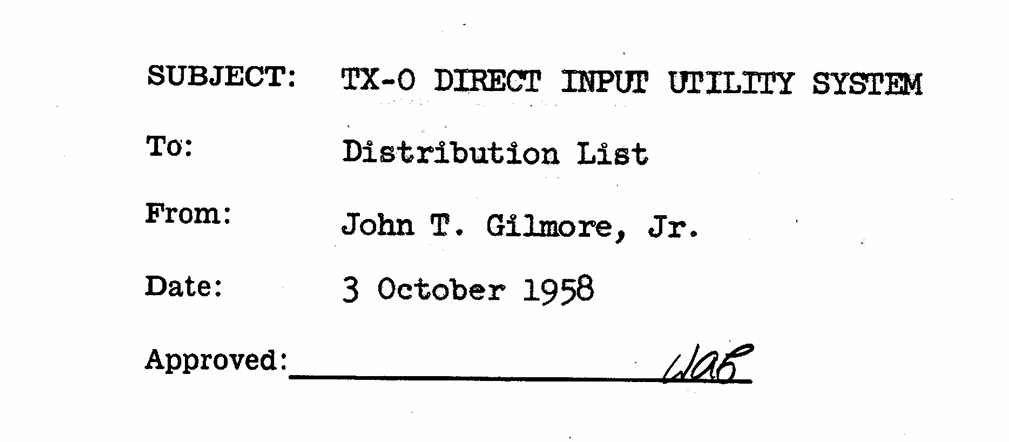
Utility Tape 3 (UT-3)
- Accept commands from Flexotype
- Modify memory through switch storage
- Search memory, edit, run, print diff
TX-0 Direct Input Utility System
- Try "some new programming techniques"
- Conversion of symbolic in-memory program
- Provide "immediate information" to help find errors
Interactive programming
TX-0 Direct Input Utility System features
- Hark - modify in-memory instruction and dump diff
- Find - search memory for a value (20 seconds)
- Outlaw - how did control get to a given point
- Flow Chart Display - visually trace program execution
Costs of direct use
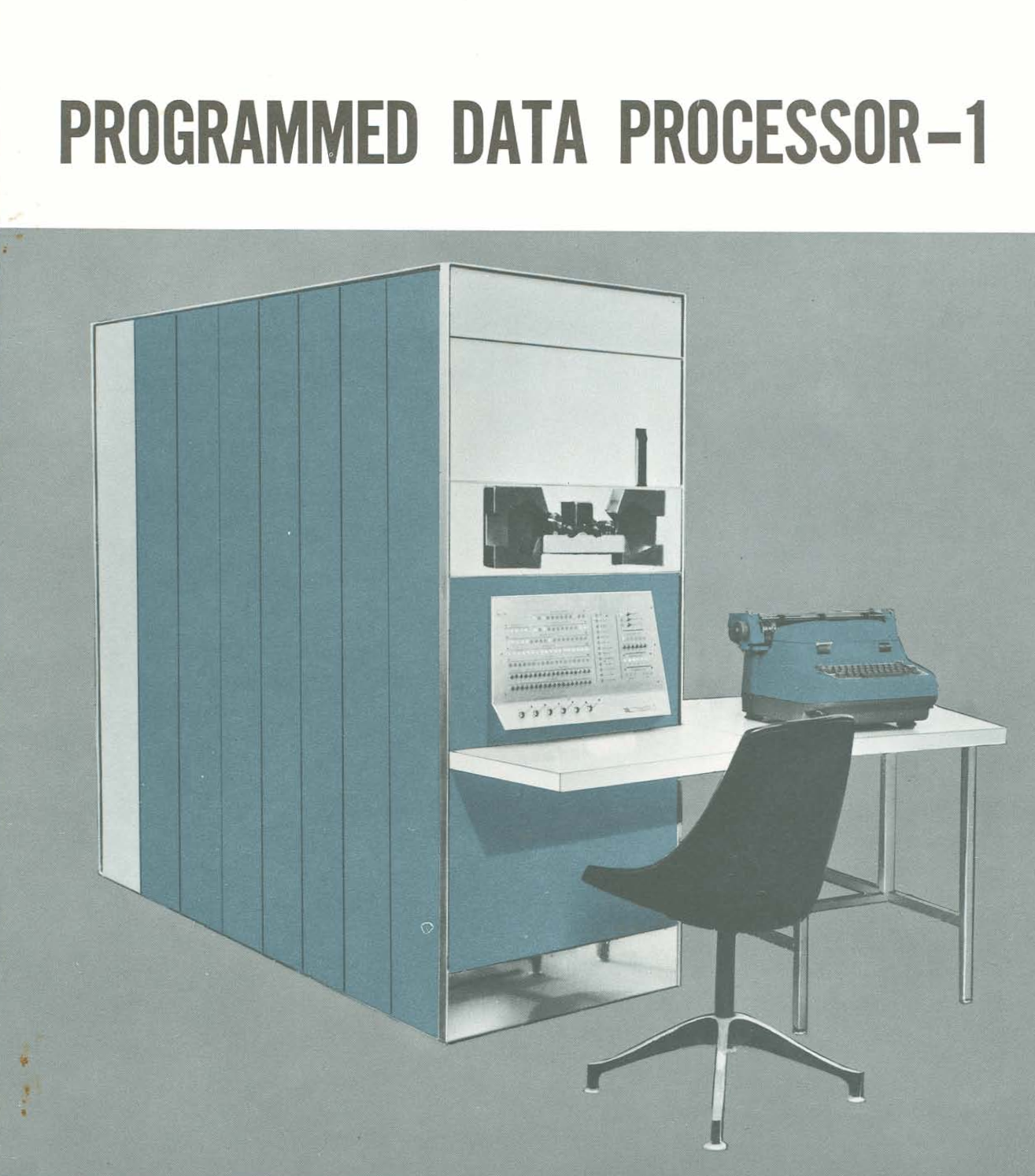
PDP-1 costs $120,000 in 1960 (~1.2M now)
Interactive use too expensive in practice!
Reflected by nicknames
- Expensive Synthesiser
- Expensive Typewriter
- Expensive Planetarium
Time-sharing
Making interactive use practical
Time-sharing
A Time Sharing Operator Program
- Let multiple users interact with a single machine
- Most of the time spent thinking and typing!
- Idea "seemed quite inevitable" (McCarthy)
- Thought "everybody had in mind to do" it
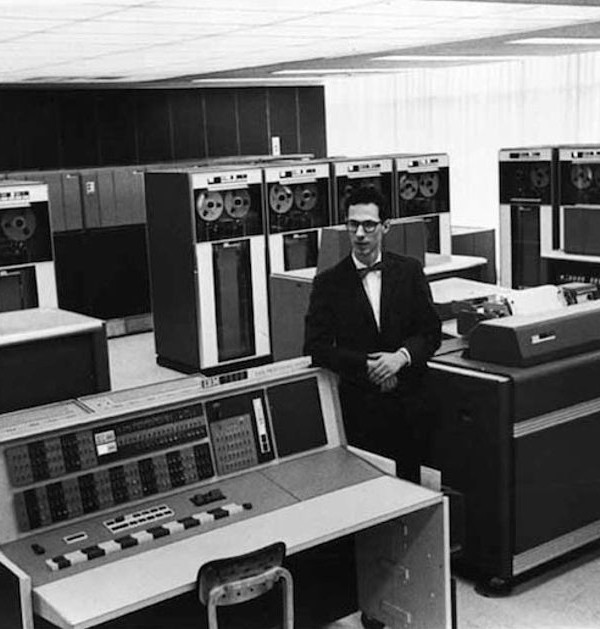
Major undertaking, but eventually...
Compatible Time-Sharing System (CTSS), funded by Project MAC (ARPA)
IBM 7094 (mid-1960s)
- Over 100 terminals
- 30 concurrent user
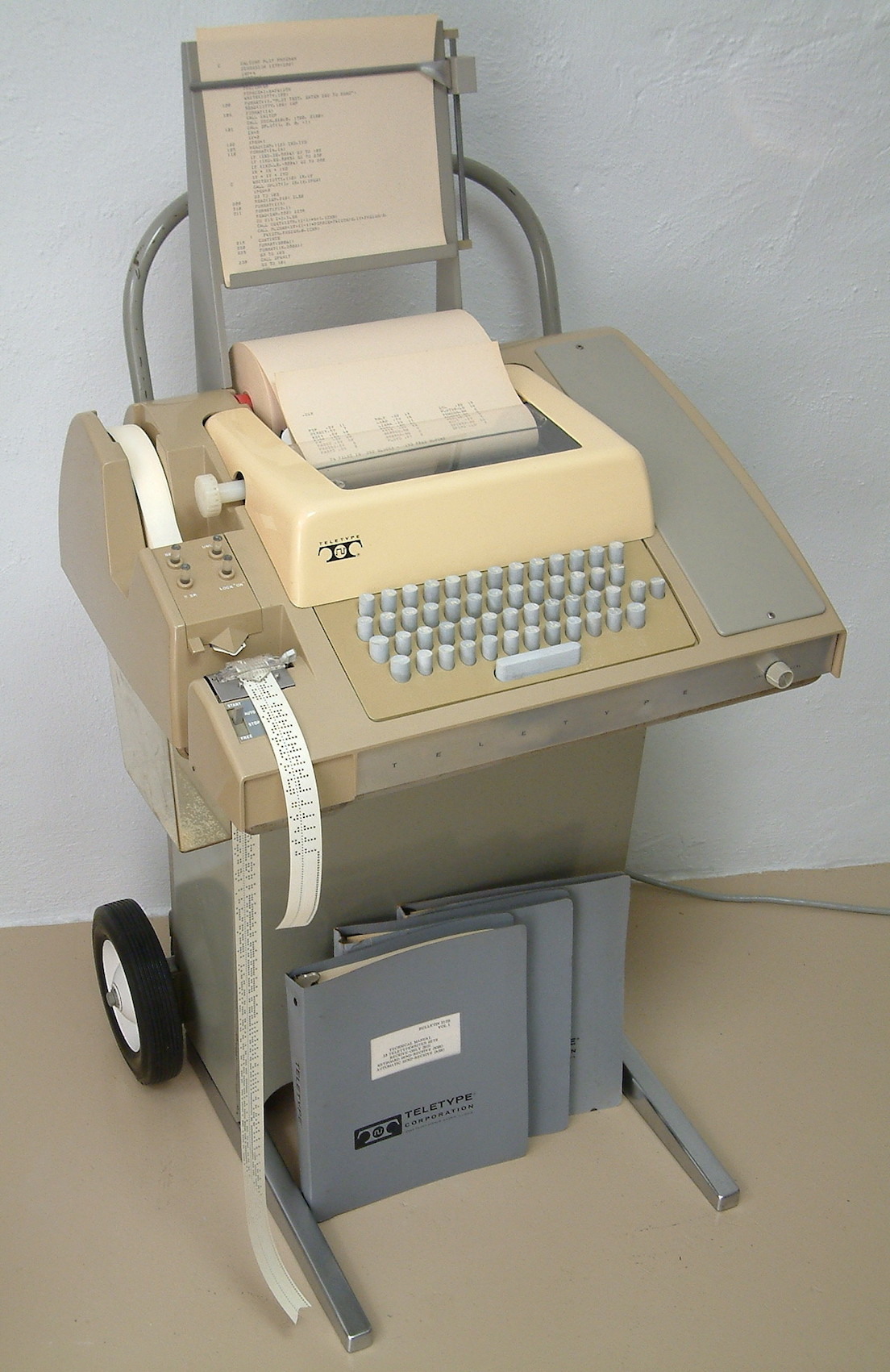
Teletype terminal
Way more limited interaction than TX-0!
Slow line-based
input and output
Initially no screen
Different kind of programming is needed...
Lisp
As a language for hackers
History of Lisp
Correcting misconceptions
-
Lisp is the first functional language
Started as FORTRAN library & is imperative! -
Lisp was based on the lambda calculus
Motivated by needs of symbolic AI -
Code as data motivates S-expressions
First versions had more ordinary M-expressions
An Algebraic Language for the Manipulation of Symbolic Expressions (McCarthy, 1958)
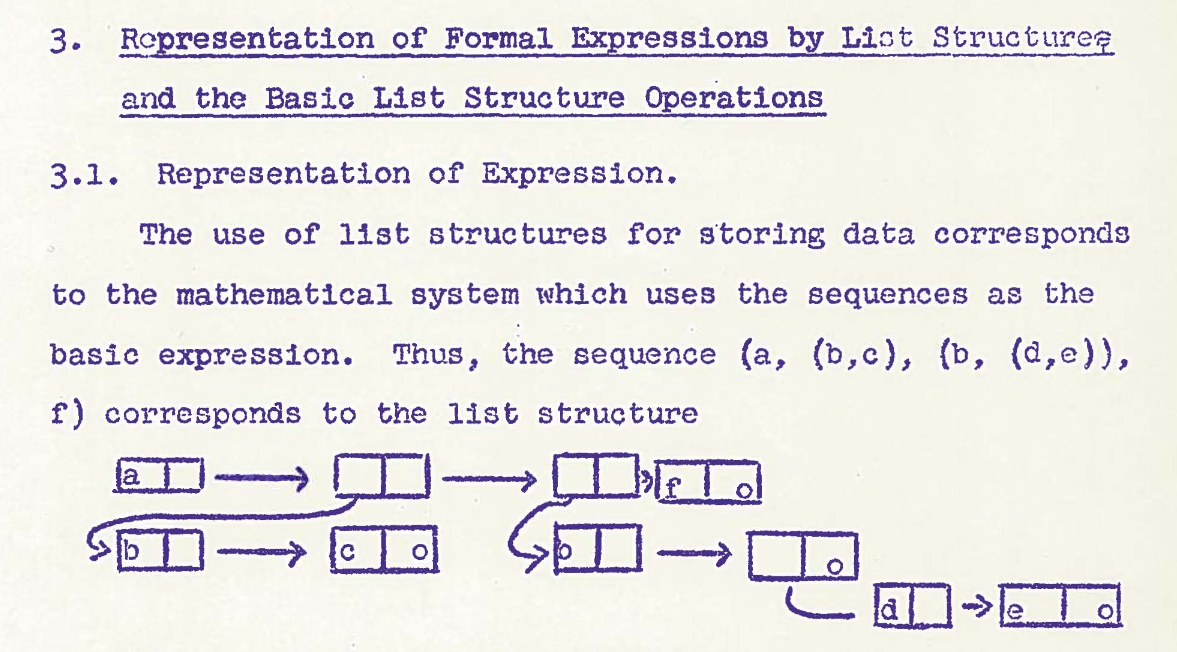
Code as data becomes an appealing feature for AI!
Meta-programming (aka Recursive Self Improvement)
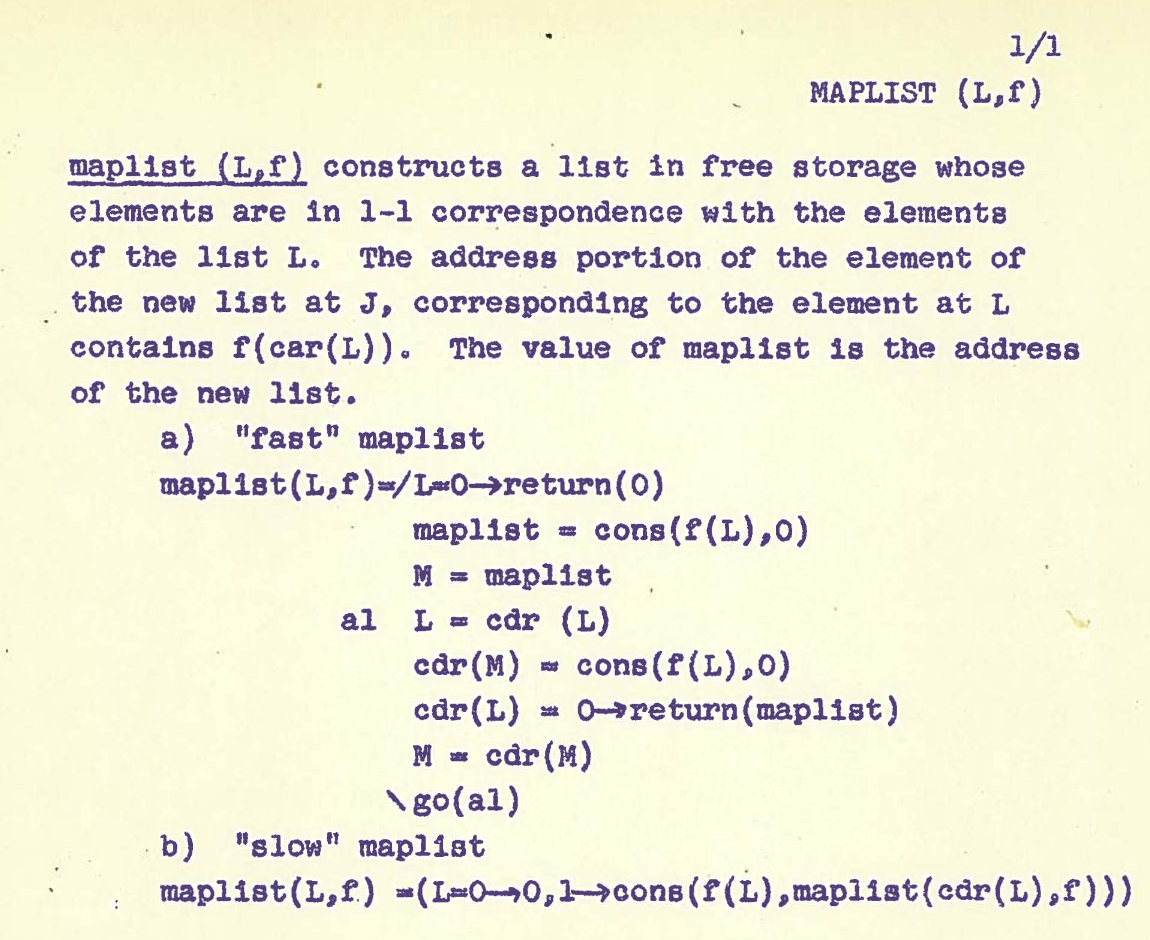
LISP 1 (1959)
- List processing
- Imperative features
- High-level language
LISP 1.5 (1961)
Programmer's Manual published in 1961
Lisp hackers
The birth of the eval function
- Implementation by Steve "Slug" Russell
- Function
evalwritten as mathematical model - Russell points out this is an interpreter
- Lisp becomes "meta-circular" by accident!
Towards interactive Lisp
Non-interactive Lisp
- Prefix program with 11 cards from "Utility Desk" drawer (room 26-265)
Testing time-sharing on IBM 704
- Evaluates entered expression
- "TEN-Mode" to make entry easier
Interactive Lisp for PDP-1
- L Peter Deutsch at BBN
- Needs mechanism for rapid program editing!
(LAMBDA (X) Y
  (COND ((NULL X) Y)
  (T (CONS (CAR X)
    (APPEND (CDR X) Y)))))

*P
   (LAMBDA (X) Y (COND & &)).
*2 P
   (X)
*(3)
*(2 (X Y))
*P
   (LAMBDA (X Y) (COND & &)).
Interactive Lisp editor (1963)
Fixing wrong argument list (X) Y to (X Y)
P to print outline
2 P to focus and print
(3) to delete third item
(2 (..)) to replace
Interactive programming at MIT
-
Hacker culture dominant
Direct access to computers, liberal policies -
Mostly documented in informal memos
Disregard for conventional academic values -
Contrast to traditional business use
Using computer interactively is a waste of money! -
Enabled by new computer interfaces
Direct use of TX-0 and time-sharing teletype
Cultures of Programming
Home Continue to Part 7