NPRG085: Theory of Programming Languages
Tuples, records and subtyping
Tomáš Petříček and Vít Šefl
petricek@d3s.mff.cuni.cz | sefl@ksvi.mff.cuni.cz
@tomasp.net | https://tomasp.net

Demo
Can we formalise something useful?
Covariant arrays
TypeScript, Java and others
- Dog can be used where Animal is expected
- Dog is a subtype of Animal (
Dog <: Animal) - Covariant arrays, i.e.
T1 <: T2thenT1[] <: T2[] - Conscious decision in TypeScript and Java
- Not sound! Can we show this?
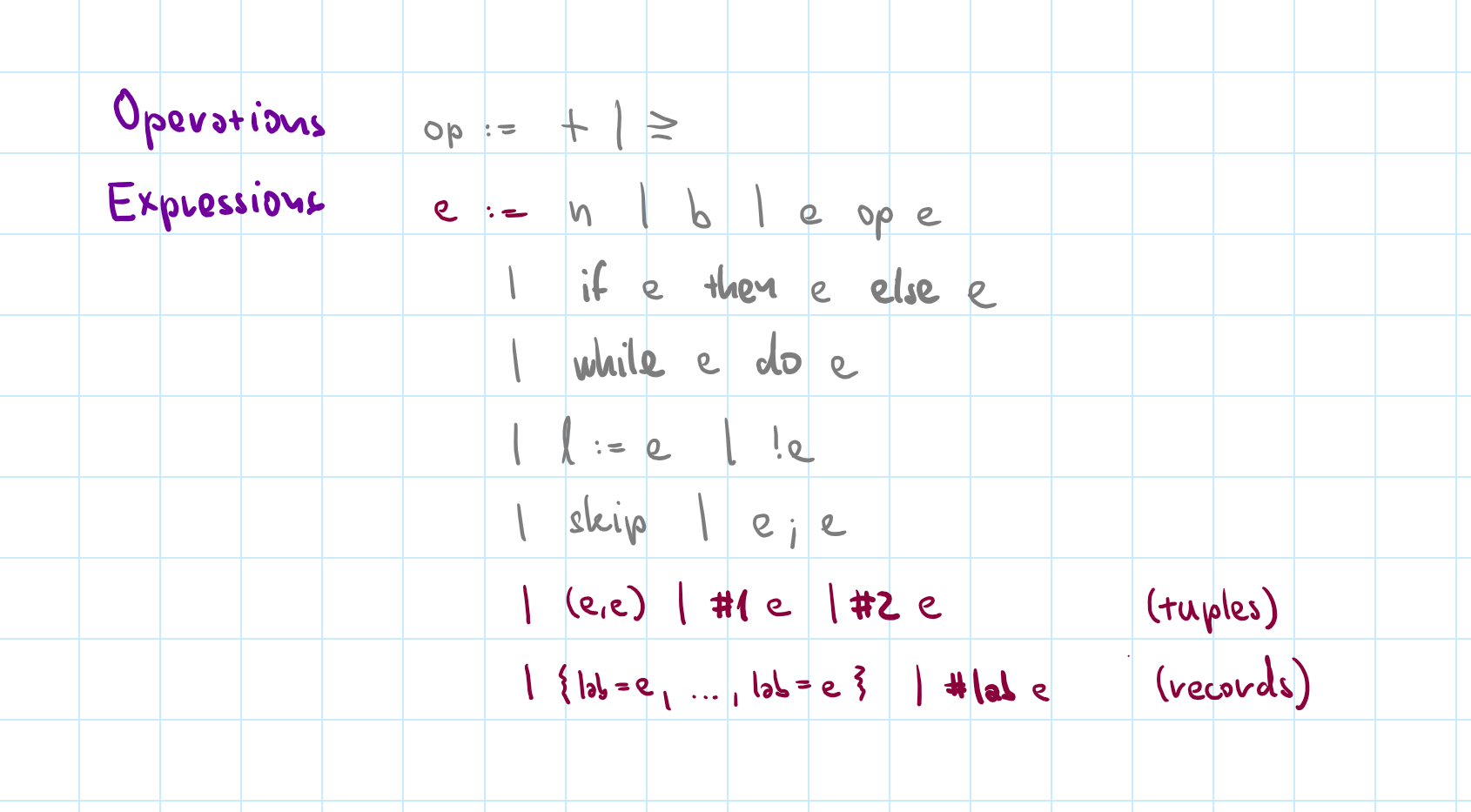
Tuples and records
Extending the language
Tuples and records
Demo
Tuples and records in F#
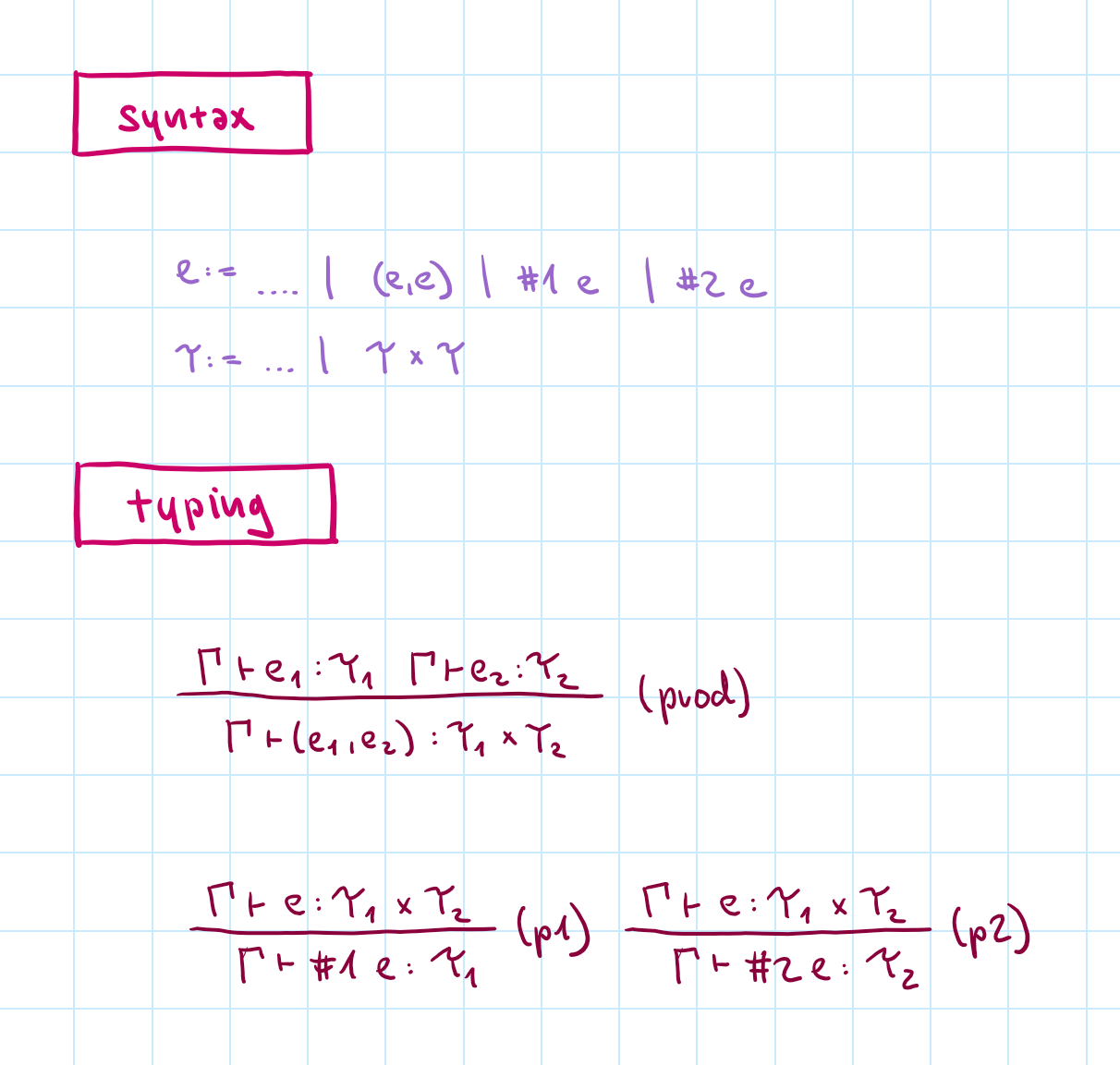
Syntax and types
Element accessors (fst and snd) rather than pattern matching
Obvious typing rules!
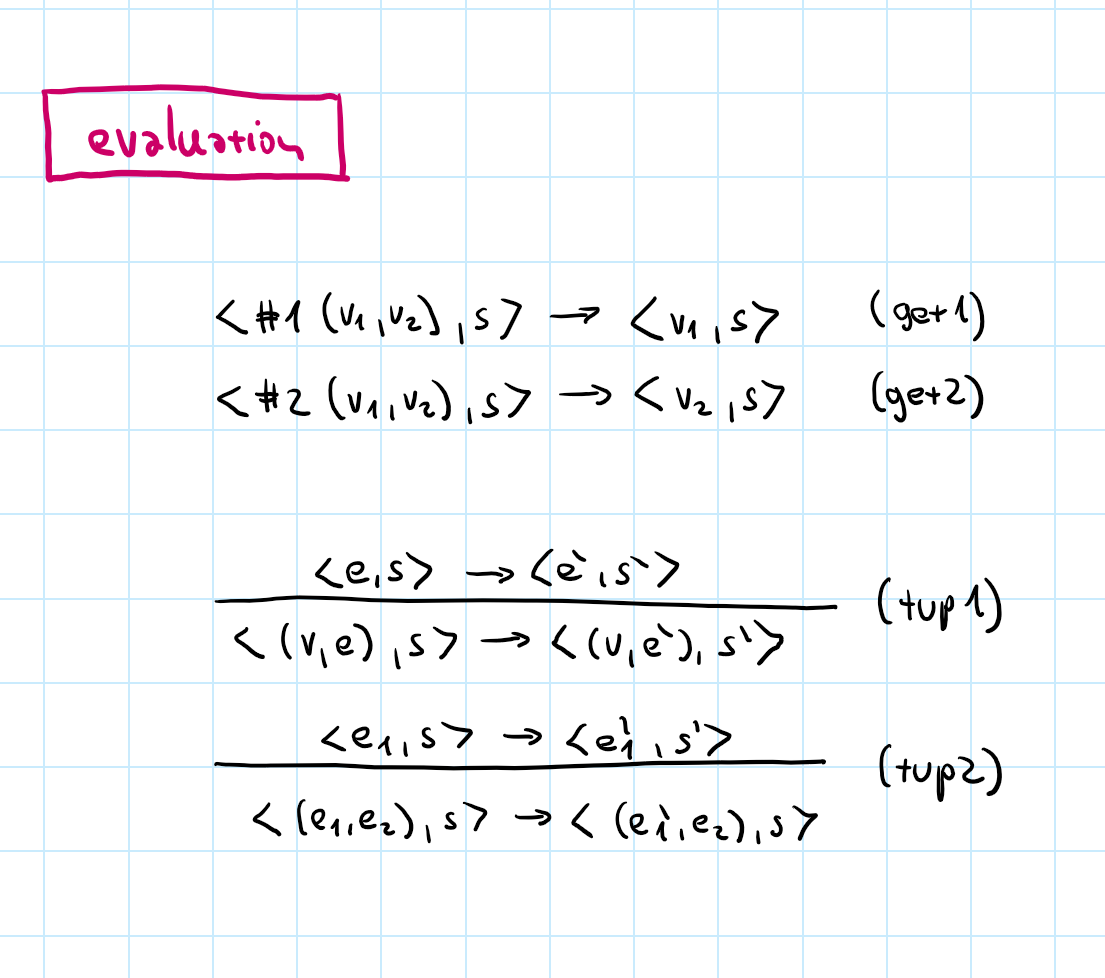
Evaluation rules
Eliminating destructor & constructor pair is a common pattern!
#1 of tuple of values
#2 of tuple of values
Specify left-to-right evaluation order of sub-expressions
Evaluation contexts
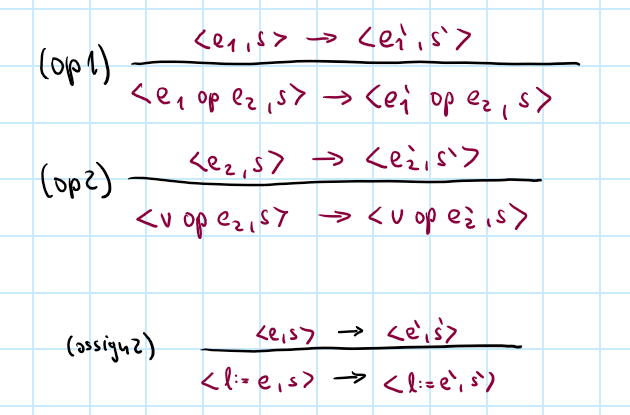
Specifying evaluation order
- Expression reduces
- In a given syntactic form
- When sub-expression reduces
Use just a single rule
- Specify evaluation context \(E[-]\)
- Expression in a context \(E[e]\)
- \(E\) includes \((v + -)\) and \((- + e)\) but not \((e + -)\)
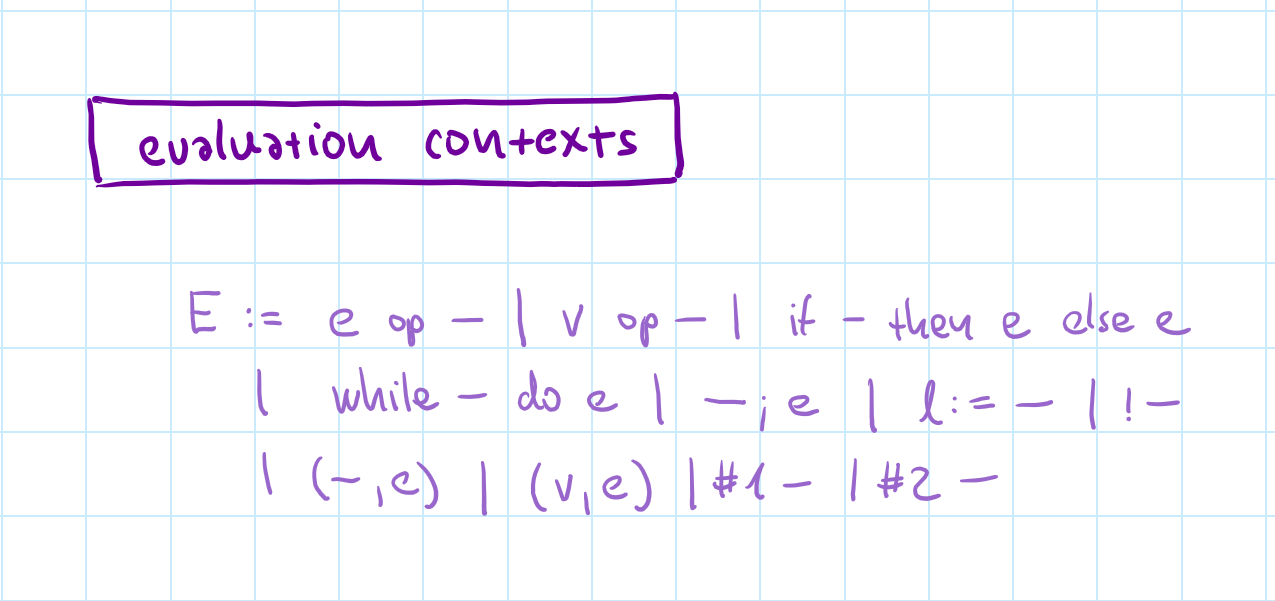
Evaluation context
Left to right order
Specify all the positions where sub-expression can reduce
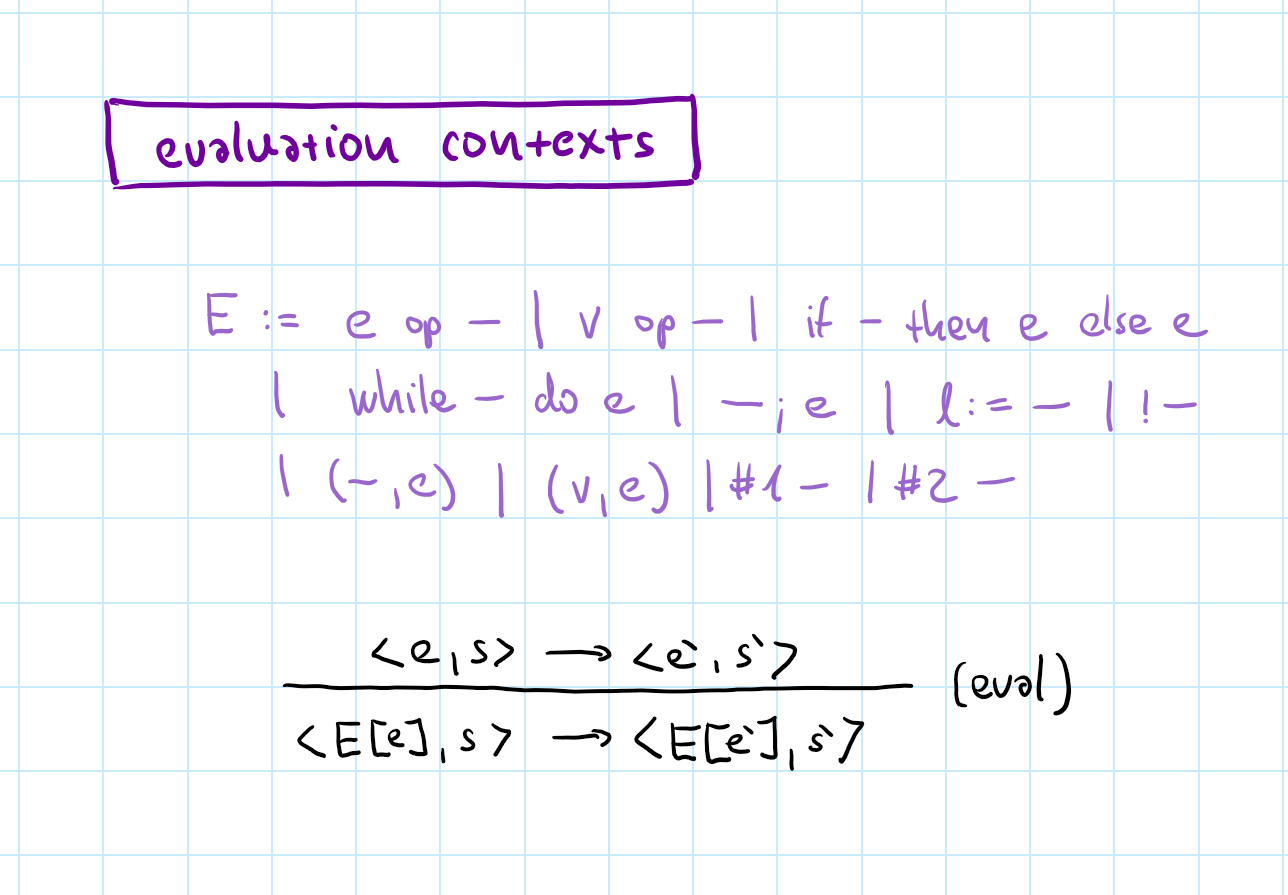
Evaluation context
Left to right order
Specify all the positions where sub-expression can reduce
Single rule for sub-expression reduction!
Makes proofs harder
// Structural types
// (not named in advance)
let pt : { x:number, y:number }
  = { x: 0, y: 0 }

// Type can be inferred
let pt = { x: 0, y: 0 }

// Field access checked
pt.x + pt.y
Records
Structural types
as in TypeScript
Nominal types
as in ML/F# or Java
Structural types are easier - no definitions in advance
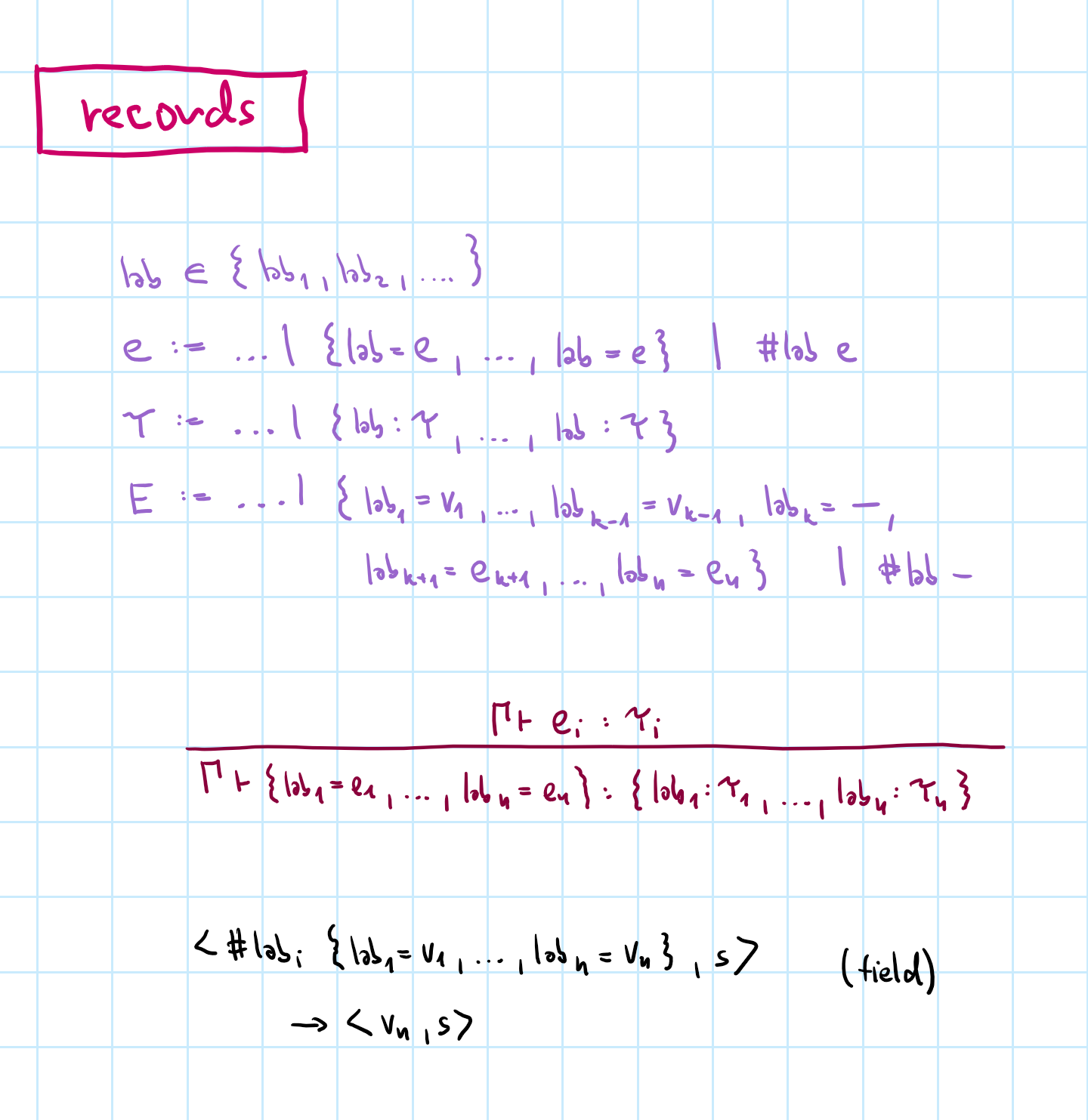
Adding records
Type syntax mirrors expression syntax
Type uses lab:T
Value uses lab=e
Destructor/constructor evaluation pattern
Sub-expression reduction for free!
Subtyping
Formal model
Subtyping

Definition
- A subtype
Scan be used anywhere where a supertypeTis expected - Written as
S <: T
In practice
- Dynamic types - based on runtime
- Static types - subtyping relation
- Inheritance introduces subtyping
- Type structure, interfaces, etc.
Extending type system
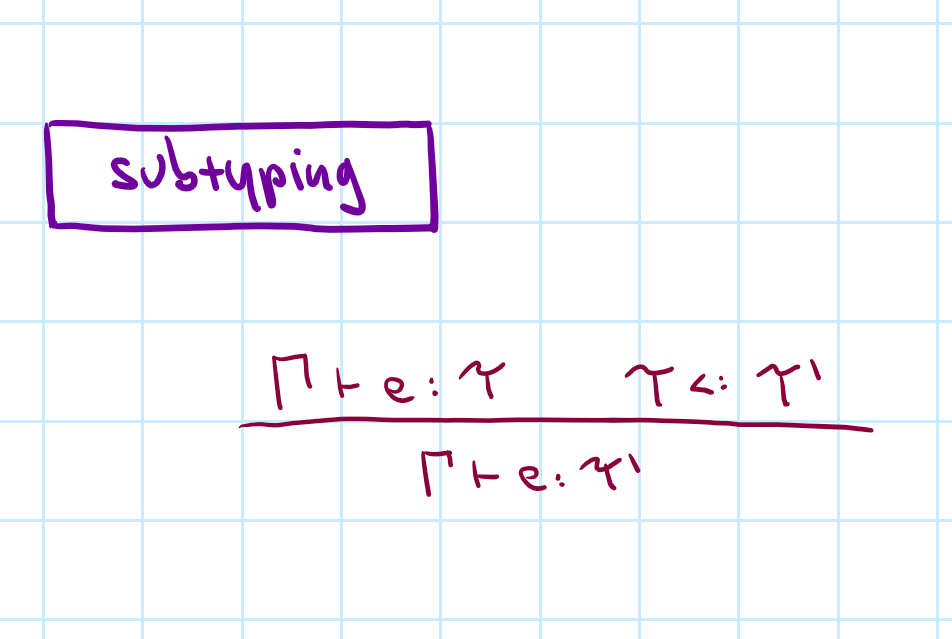
Easy to define
- Expression of subtype \(\tau\) can be types using any supertype \(\tau'\)
Breaks nice properties!
- Type preservation gets tricky
- Uniqueness of types no longer holds
- Not syntax-directed typing rule
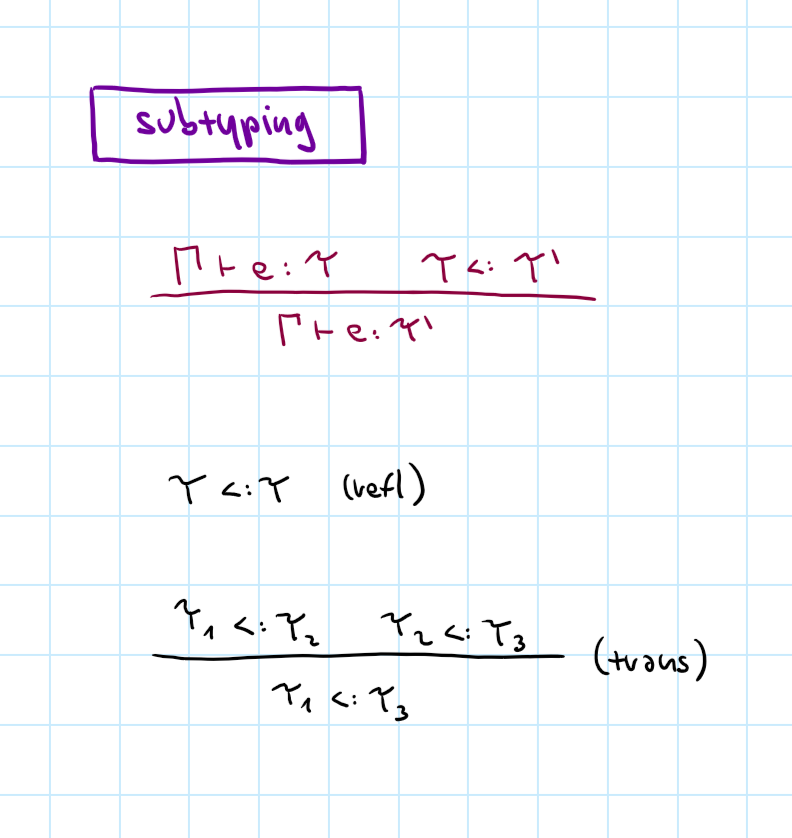
Subtyping rules
Typing judgement using subtyping relation
Derivation rules for subtyping - preorder
- Reflexive
- Transitive
Neither symmetric
nor anti-symmetric
Subtyping for records
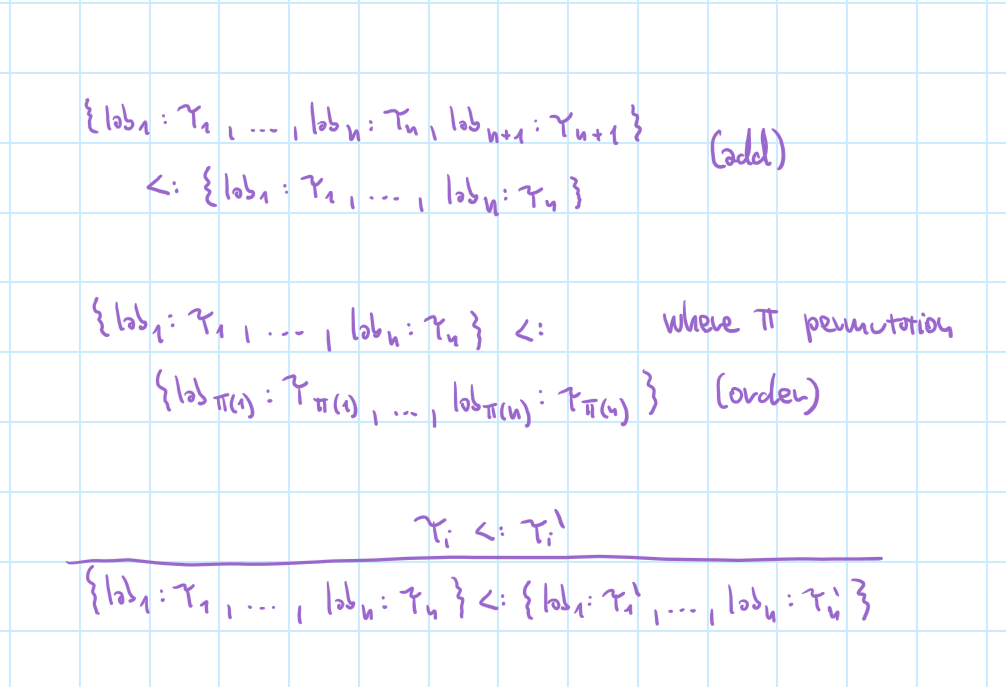
Three record rules
Additional field at the end
Reordering of fields
Subtypes of nested values
Primitive rules!
Often need a combination
Which of these are true?
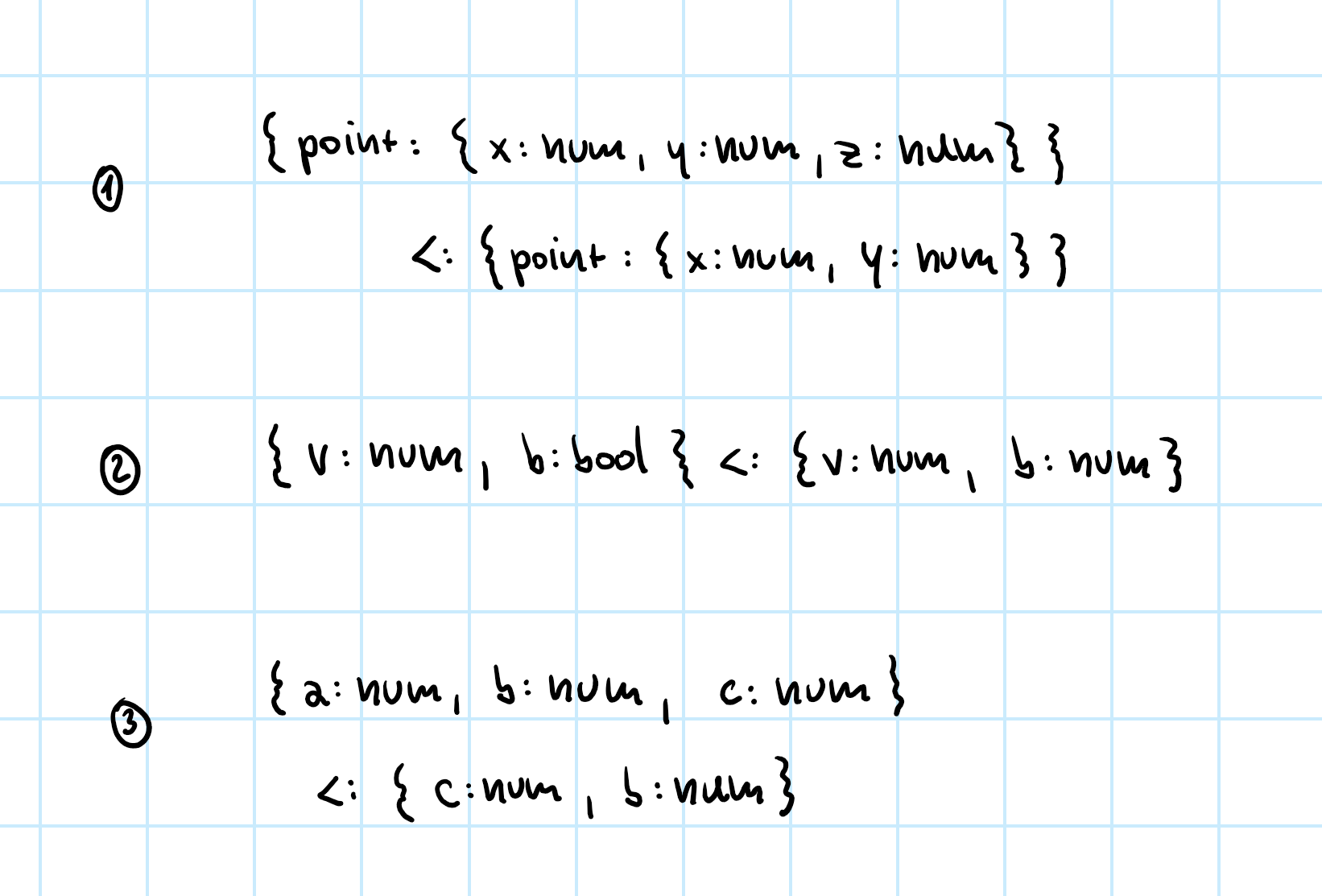
Writing subtyping derivation
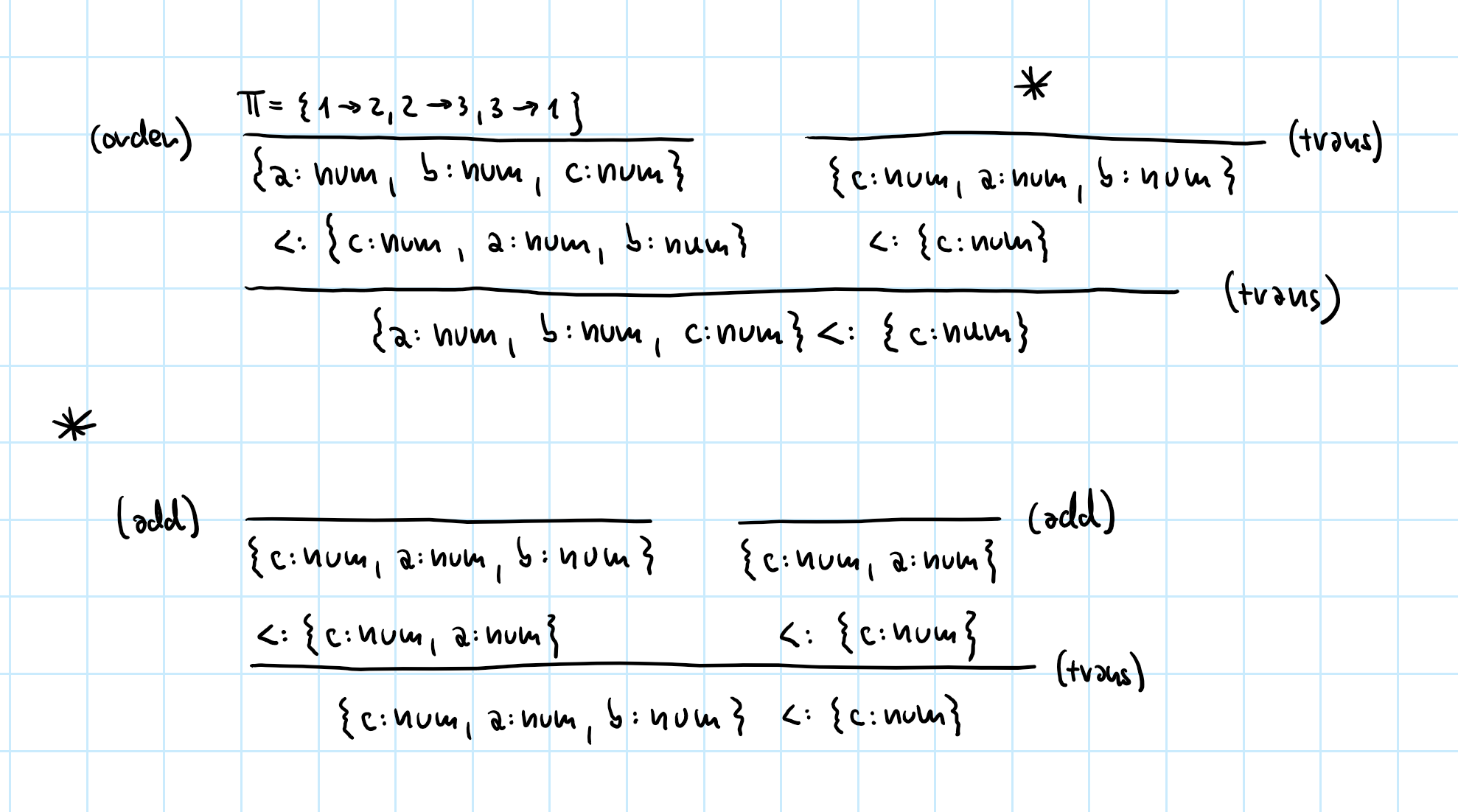
Same as typing derivation or reduction derivation
One relation can have multiple different derivations!
Arrays
Subtyping and arrays
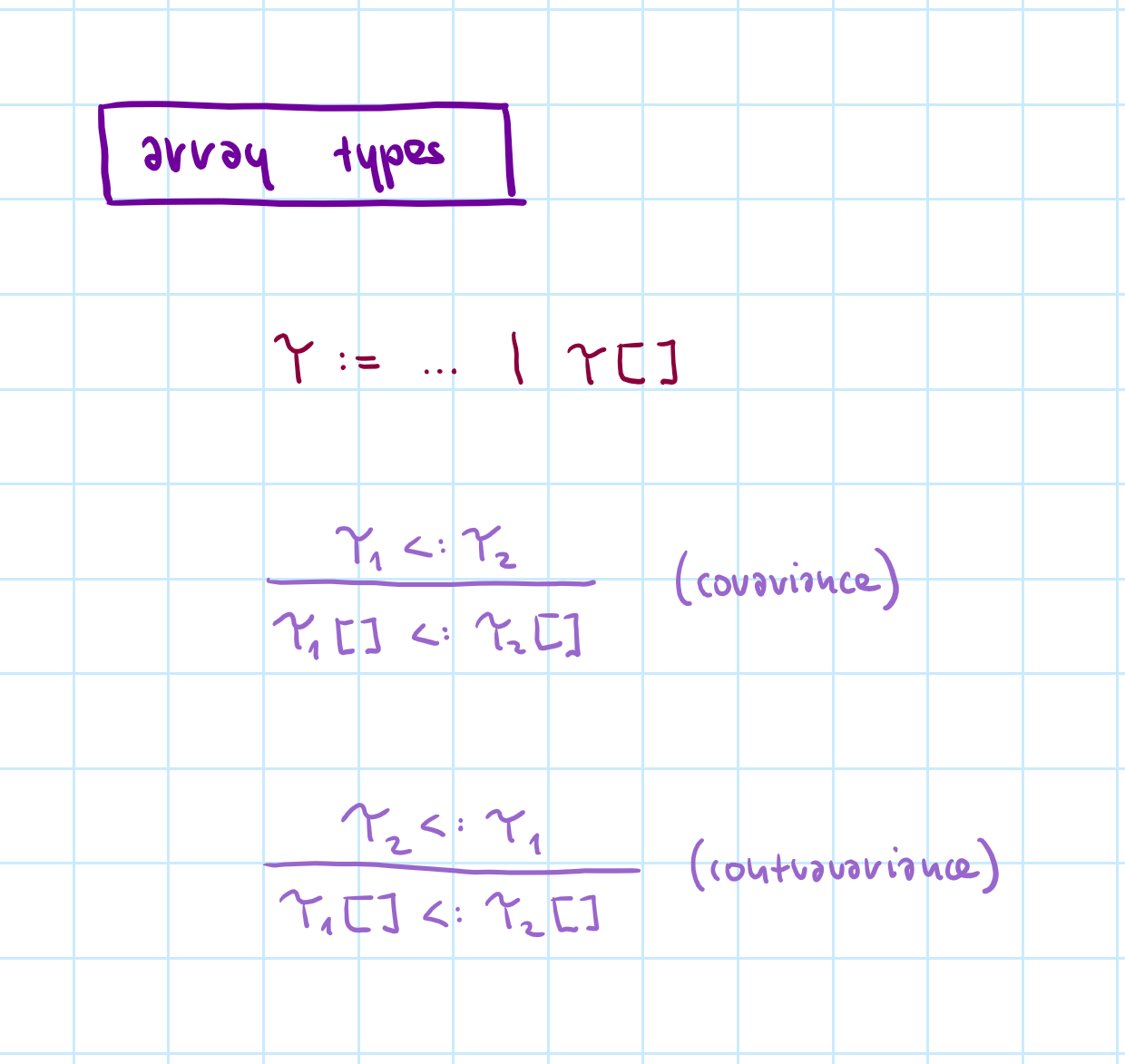
TypeScript arrays
What subtyping rule
is right for arrays?
- Covariance
- Contravariance
Both of them break!
The trouble with arrays
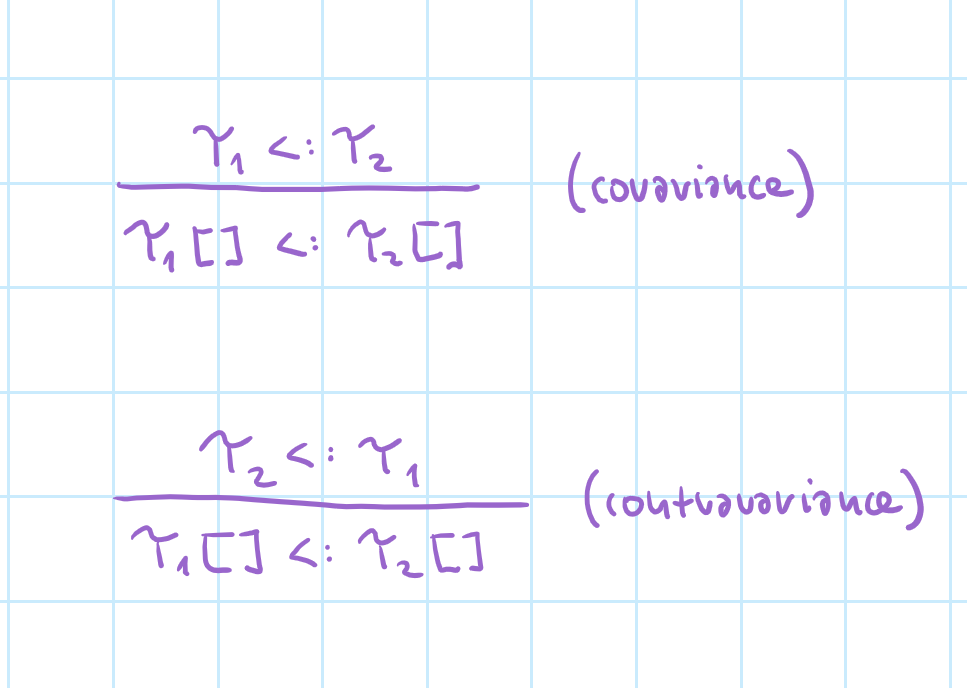
How the rules break
Covariance - can put Cat in Dog[]
Contravariance - can get Cat from Dog[]
Would the proofs fail?
- Typing preservation would break!
Correct array handling
- Covariance for read-only access
- Contravariance for write-only access
Conclusions
Tuples, records and subtyping
Conclusions
Tuples, records and subtyping
- Reduction using destructor/constructor pattern
- Subtyping as yet another kind of derivation
- Getting close to formalizing useful things!
- Real-world languages are large and messy